
The Practice
What Is Sound Healing?
Vibrational medicine, Nada Yoga, and what actually happens in the body when the bowls are played.
Vibrational Medicine
Sound as Medicine
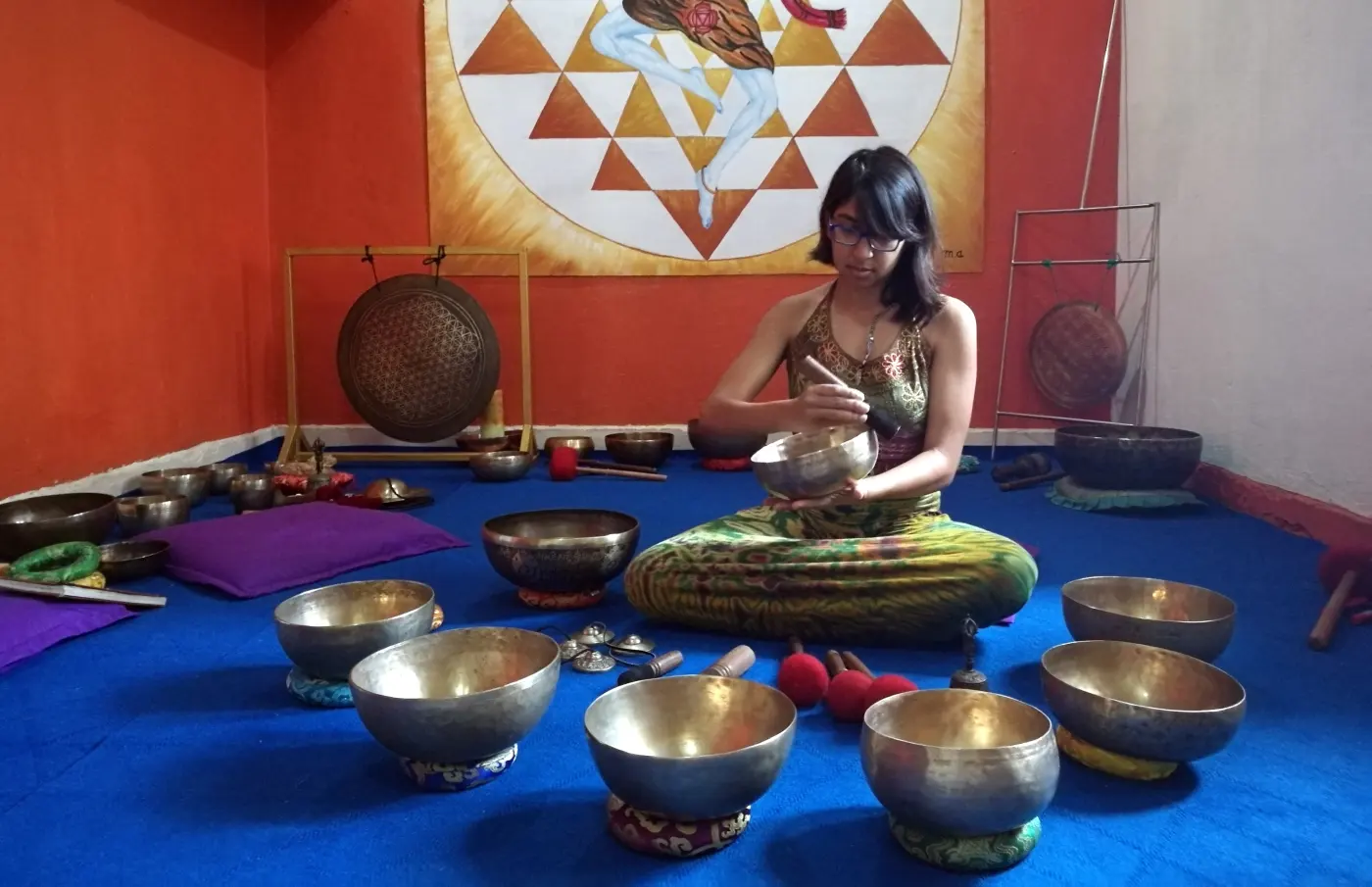
I am a life student and practitioner of Nada Yoga and sound healing with the singing bowls, bamboo flute, gong, mokugyo drum and voice.
Everything Is Vibrating
Also known as vibrational medicine, sound healing uses sound and vibration for healing on the physical, mental and spiritual levels. Everything that exists is vibrating with energy, including the body cells. When an organ or tissue is unbalanced, vibrating 'out-of-tune', disharmonious, not at 'ease', it leads to 'dis-ease'. Sound healing works to restore the bodily organs to harmonious resonance with the whole being.
The human body is approximately 60% water, with even higher concentrations in the organs. Water molecules resonate strongly with the vibrations from the singing bowls, so physical blockages are literally shaken up as the bowls are played around or on the body, what can be called a cellular massage.
Union Through Sound
Simply put, Nada Yoga is union with the divine self through sound and vibration. It is an ancient Indian metaphysical system based on the premise that the entire cosmos, including us, is made up of energy vibrations. Sound as we hear it is merely the audible range of these vibrations.
'Nada' is the primal sound or vibration, from the Sanskrit for 'flow of consciousness'. 'Yoga' means union: the spiritual union of individual consciousness with cosmic consciousness. We gradually purify random sound into organised sound, into simpler and simpler mantras, into pure tone, eventually ending in silence.
Binaural Beats
Where the Sound Takes You
The bowls produce steady, regular sound waves that send the brain into deeply relaxed and meditative states. When two bowls of similar pitch are played together, the brain tunes to the difference between them, and follows it down.
Beta · 12–35 Hz
Alertness, logic and critical reasoning; or, if too high, stress and anxiety. Most of the working population spends the majority of their waking hours here.
Alpha · 8–12 Hz
Relaxed alertness, daydreaming, creativity and light meditation. Heightens memory, learning, imagination and concentration. The gateway to the subconscious.
Theta · 4–8 Hz
Deep relaxation, light sleep and deep meditation. The subconscious realm where profound insight, exceptional creativity and vivid visualisation are experienced.
Delta · 0.5–4 Hz
Deep, dreamless sleep; deep transcendental meditation; and deep healing. The gateway to the collective unconscious.
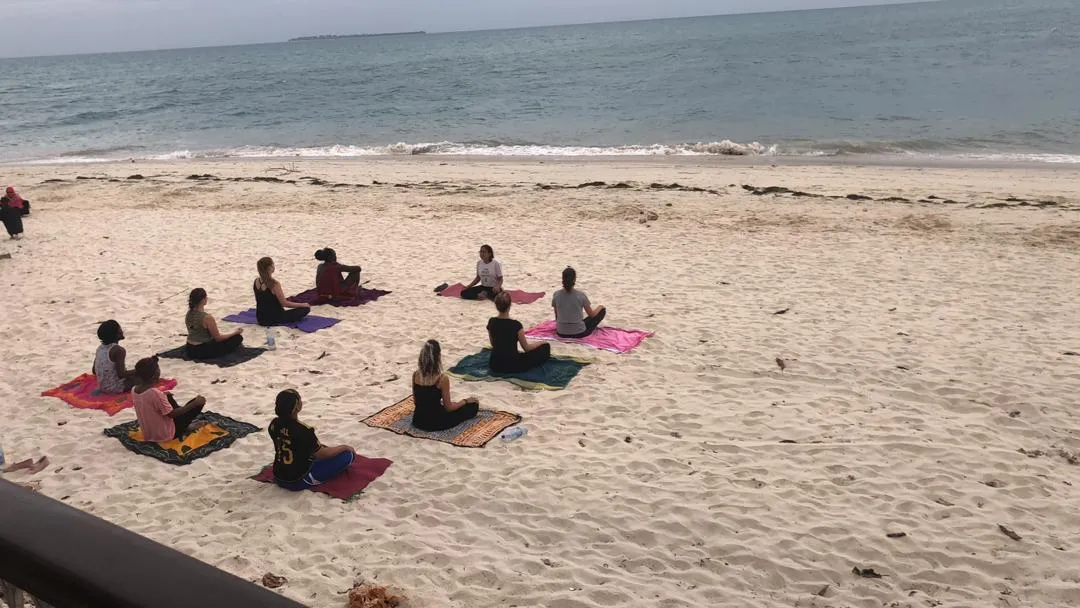
Several participants in my singing bowl meditations have reported being unsure whether they were awake or asleep, telling of the deeply meditative theta state.
My Journey with Sound Healing
Closing my eyes, I allow the sound of the Tibetan singing bowls to flow through and permeate every cell of my body. That ancient voice guides me into space, a deeply comforting darkness where glowing orbs hover with answers to the mysteries of the universe. A deep growl reverberating from the largest bowl takes me centuries, millennia back, to a temple high in the Himalayan mountains. My present soul joins the gathering and a voice murmurs ‘Welcome back, child.’
This was the defining meditation that led me to make the final decision to delve into sound healing: my first live meditation with the Tibetan singing bowls, in Thailand, in a group facilitated by four sound shamans. When the ancient voice of the singing bowls called me, I stepped tenderly onto this path of Nada Yoga.
The clearest way to understand sound healing is to lie down and receive it. Sessions run one-to-one, in groups, and as part of retreats and corporate programmes.